

A few years ago, cybersecurity was largely viewed as a technology function.
Today, it has become a boardroom priority.
The reason is simple.
Artificial Intelligence is transforming the way businesses operate, governments defend critical infrastructure, and adversaries launch cyberattacks. Every major economy is investing heavily in AI. At the same time, threat actors are using the very same technology to automate attacks, create sophisticated phishing campaigns, generate deepfakes, and identify vulnerabilities faster than ever before.
This shift has fundamentally changed the role of leadership.
Cybersecurity is no longer just about protecting systems. It is about protecting trust, business continuity, reputation, innovation, and national competitiveness.
The organisations that succeed in this new environment will not necessarily be those with the largest cybersecurity budgets. They will be those with leaders capable of aligning AI, cybersecurity, governance, and business strategy into a single vision.
That is where cybersecurity leadership becomes critical.
AI Is Reshaping the Threat Landscape
Artificial Intelligence has become both the greatest opportunity and one of the greatest security challenges of our time. Security teams are increasingly using AI to automate threat detection, analyse massive datasets, identify anomalies, and accelerate incident response.
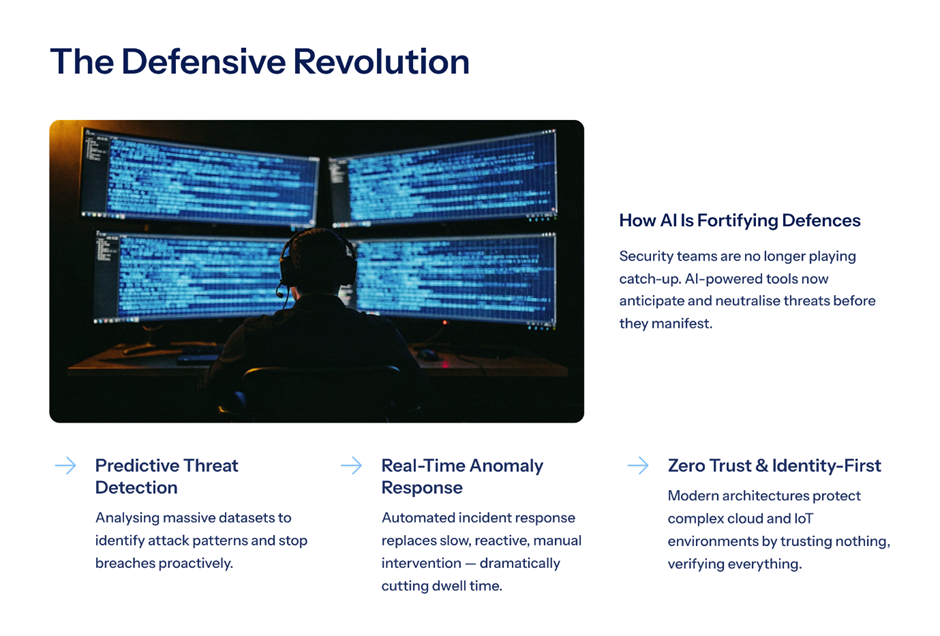
However, attackers are doing the same thing.
Industry research continues to highlight that AI is making cyber threats faster, more scalable, and more difficult to detect. Security experts increasingly view AI as both a powerful defensive capability and a growing source of cyber risk.
The rise of AI-generated phishing emails, synthetic identities, automated vulnerability discovery, and deepfake-enabled fraud demonstrates how quickly the threat landscape is evolving.
The challenge facing leaders is no longer whether to adopt AI.
The challenge is how to adopt it securely.
Lessons from the Russia – Ukraine Cyber Conflict
The ongoing Russia – Ukraine conflict has become one of the most significant demonstrations of modern cyber warfare.
Unlike traditional conflicts, cyber operations have become deeply integrated into military, economic, and political strategies.
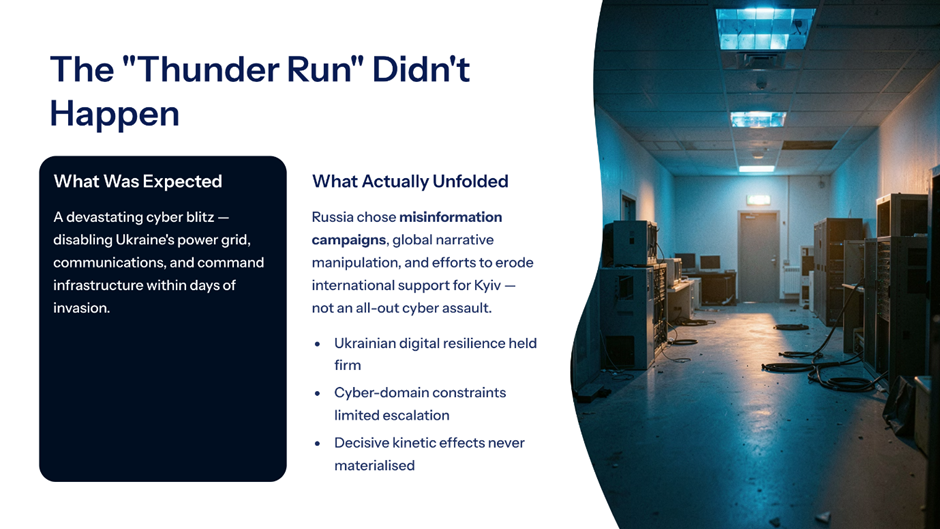
Ukraine has spent years strengthening its cyber resilience following repeated attacks on government systems, critical infrastructure, and energy networks. Cyber operations have become an essential component of the broader conflict environment.
Recent reports have also highlighted how AI-generated content is being used within cyber espionage campaigns targeting defence organisations. Attackers have leveraged AI-generated documents and deceptive content to improve the effectiveness of cyber operations.
For business leaders, the lesson is clear:
Cybersecurity can no longer be treated as an isolated IT function.
Geopolitical tensions now have direct implications for supply chains, cloud infrastructure, third-party vendors, and critical business operations. The distance between global conflict and enterprise risk is shrinking.
The Gulf Region’s Race Toward AI Security
The Gulf region is rapidly positioning itself as a global AI and digital innovation hub.
Countries such as the United Arab Emirates and Saudi Arabia are investing aggressively in AI, smart cities, digital infrastructure, and national cybersecurity programs.
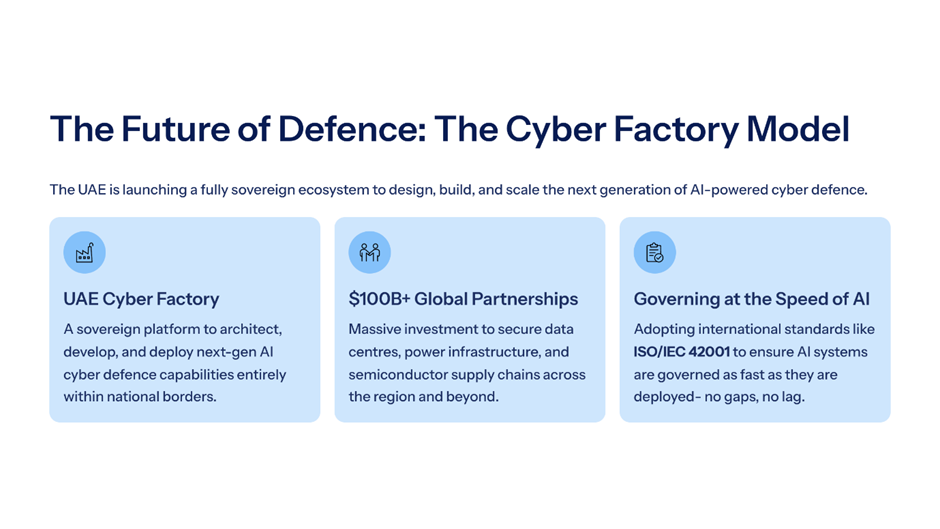
These nations understand a crucial reality:
Digital transformation without cyber resilience creates national vulnerability.
As regional tensions continue to influence security priorities, governments across the Gulf are increasingly focusing on cyber defence capabilities, AI governance frameworks, and critical infrastructure protection.
The Gulf’s approach offers an important lesson for enterprises worldwide.
Technology adoption must be accompanied by governance, risk management, and strategic oversight.
Otherwise, innovation can become a source of exposure rather than an advantage.
Europe’s Emerging Cybersecurity Model
Europe has taken a different but equally important path.
The region has focused heavily on regulation, digital trust, privacy protection, and cybersecurity governance.
The rise of European AI and cybersecurity initiatives demonstrates a growing recognition that trust is becoming a strategic asset. Major industry forums increasingly focus on AI security, cyber resilience, and digital infrastructure protection.
The United Kingdom has recently advanced AI-powered cyber defence initiatives designed to protect critical infrastructure, telecommunications networks, and national assets from increasingly sophisticated threats.
This reflects a broader trend:
Leading nations are moving beyond reactive cybersecurity.
They are building proactive, AI-enabled security ecosystems.
Where India Stands Today
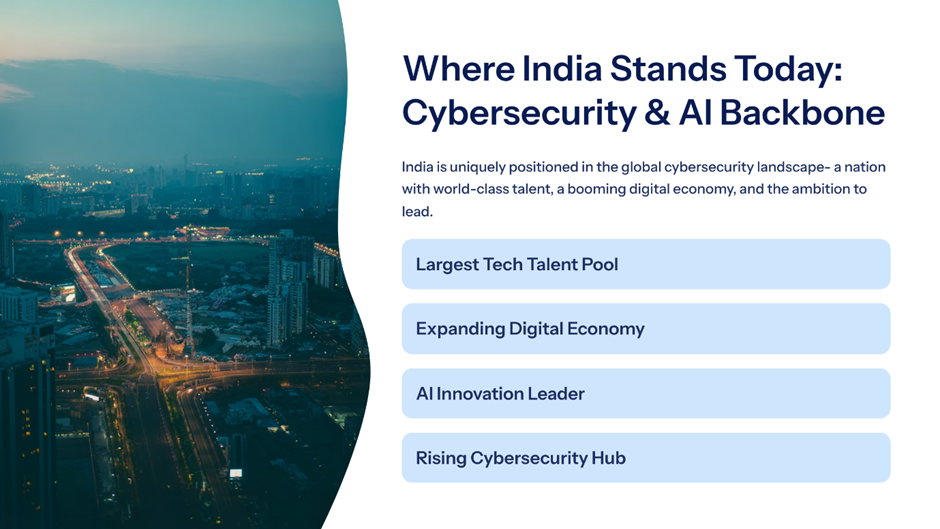
India is uniquely positioned in the global cybersecurity landscape.
The country possesses:
- One of the world’s largest technology talent pools.
- A rapidly expanding digital economy.
- Strong startup ecosystems.
- Growing AI innovation capabilities.
- Expanding cybersecurity expertise.
India has also accelerated efforts to strengthen its cybersecurity architecture through AI-driven capabilities and national-level initiatives.
However, significant opportunities remain.
1. AI Governance
Many organisations are adopting AI faster than they are governing it.
Clear frameworks around data security, model governance, access controls, and accountability are essential.
2. Identity-Centric Security
As AI adoption grows, identity becomes the new perimeter.
Human identities, machine identities, APIs, and AI agents all require governance.
3. Cybersecurity Workforce Development
The cybersecurity skills gap continues to widen globally.
Recent industry research shows that organisations increasingly require professionals who combine cybersecurity expertise with a strategic understanding of business.
India has an opportunity to become a global leader by developing talent capable of bridging technology and business leadership.
4. Deepfake and Information Security Readiness
The rise of AI-generated content introduces new challenges around fraud, misinformation, and trust.
India’s growing focus on deepfake detection and AI security innovation demonstrates encouraging progress, but broader adoption remains necessary.
Why Cybersecurity Leadership Matters More Than Technology
One of the most common mistakes organisations make is assuming that cybersecurity is primarily a technology challenge.
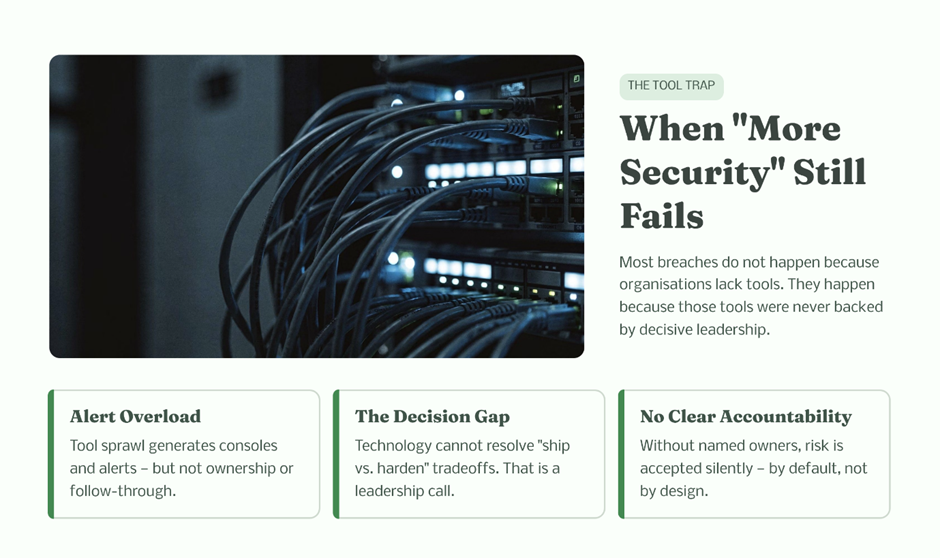
It is not.
It is a leadership challenge.
Technology can detect threats.
Technology can automate responses.
Technology can improve visibility.
But technology cannot define business priorities.
Technology cannot establish governance.
Technology cannot balance innovation against risk.
Leadership does that.
Research increasingly highlights the importance of AI governance frameworks, risk ownership, and executive accountability in managing AI-related cyber risks.
This is why organisations investing heavily in security tools often continue to experience preventable incidents.
The missing ingredient is frequently not technology.
It is strategic leadership.
The Growing Need for Authentic CXO Advisory
The age of AI demands a new type of advisor.
Not someone who focuses solely on compliance.
Not someone who focuses solely on technology.
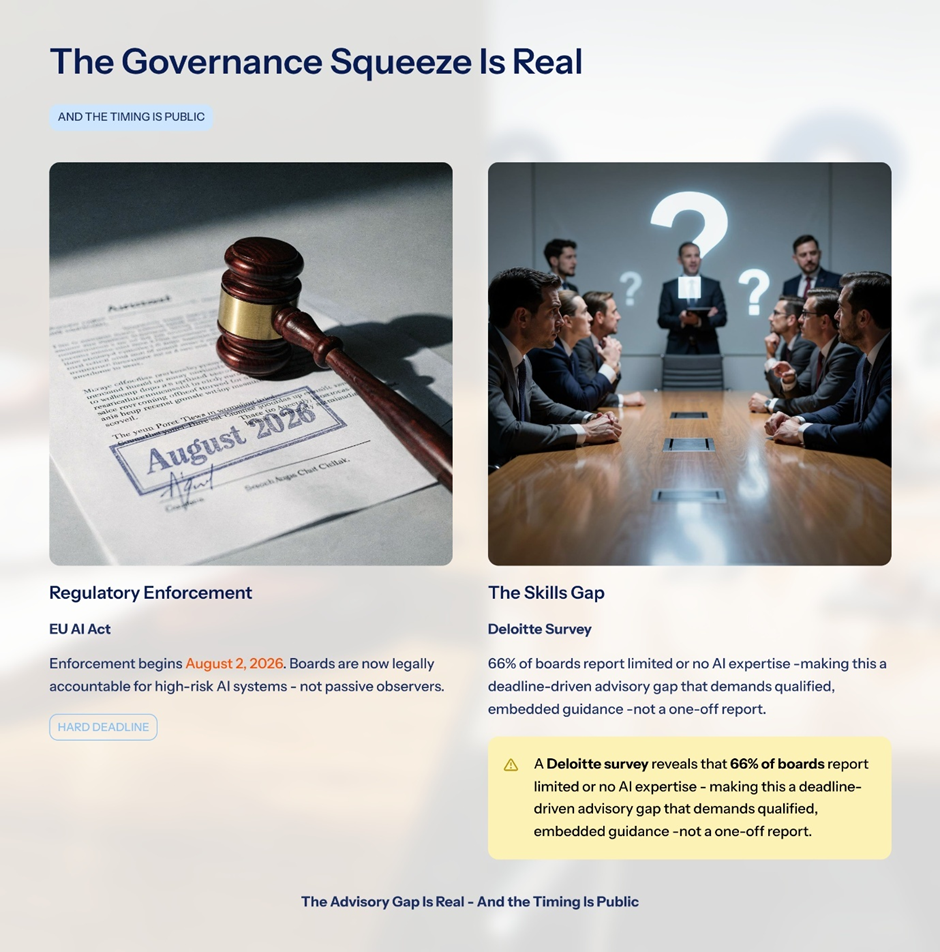
But someone capable of connecting:
- Business growth.
- AI adoption.
- Cybersecurity strategy.
- Identity governance.
- Risk management.
- Digital trust.
This is where experienced CXO advisory creates measurable value.
An effective cybersecurity leader helps organisations answer critical questions:
- How can we adopt AI securely?
- Where should we invest our security budget?
- How do we govern digital identities at scale?
- How do we balance innovation with risk?
- How do we build trust with customers, regulators, and stakeholders?
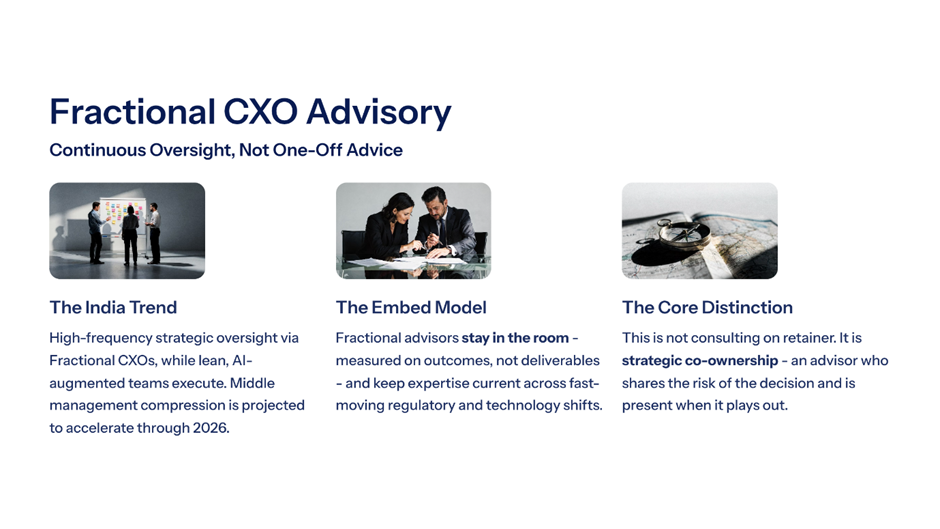
These questions cannot be answered by tools alone.
They require leadership.
Final Thoughts
Cybersecurity leadership in the age of AI is no longer about defending networks.
It is about protecting the future of the organisation.
Around the world, nations are investing in AI, strengthening cyber defence capabilities, and building digital trust frameworks.
The Russia–Ukraine conflict has demonstrated how cyber warfare has become a strategic weapon.
The Gulf region is showing how AI ambitions must be matched by cyber resilience.
Europe is proving that governance and trust are becoming competitive advantages.
India now has an extraordinary opportunity to learn from all three.
The organisations that thrive in the coming decade will not be those that simply deploy the most advanced technologies.
They will be those who combine AI innovation with strong governance, resilient cybersecurity, and visionary leadership.
Because in the age of AI, cybersecurity is no longer just a technical necessity.
Sources
- Observer Research Foundation (ORF) – India’s AI-driven cybersecurity transformation.
- World Economic Forum – AI and Cybersecurity risk management framework.
- Accenture Cybersecurity Research.
- UK GCHQ AI Cyber Defence Initiative.
- Cybersecurity workforce and AI governance reports.
- Publicly available reporting and analysis related to the Russia–Ukraine cyber conflict and evolving cyber warfare landscape.
