Cloud changed infrastructure.
Mobile changed customer engagement.
Artificial Intelligence is now changing decision-making.
But there is another transformation happening quietly in the background; one that many organisations haven’t fully recognised yet.
Identity is becoming autonomous.
For decades, Identity and Access Management (IAM) has largely been a reactive discipline. Someone joins the company; an account is created. When someone changes roles, permissions are updated. Someone leaves; access is revoked; sometimes immediately, sometimes weeks later.
The process has always depended on human intervention.
That model is rapidly reaching its limits.
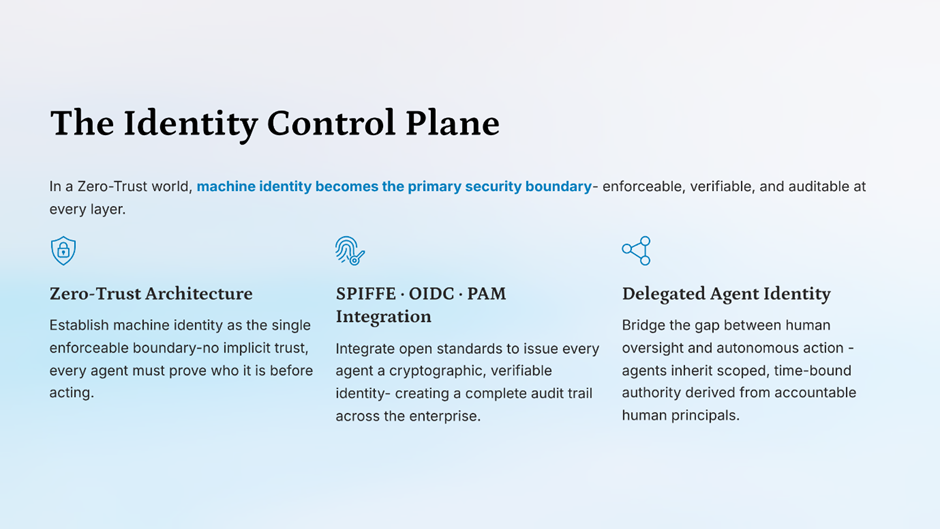
Today’s enterprises are managing not only employees but also contractors, partners, vendors, APIs, bots, AI agents, and millions of machine identities. The speed of digital transformation has outpaced the speed of manual identity governance.
The result?
Growing complexity, rising cyber risk, and increasing operational costs.
The question is no longer whether organisations need automation.
The real question is whether they are ready for Autonomous Identity Systems?
Why Identity Has Become a Boardroom Conversation
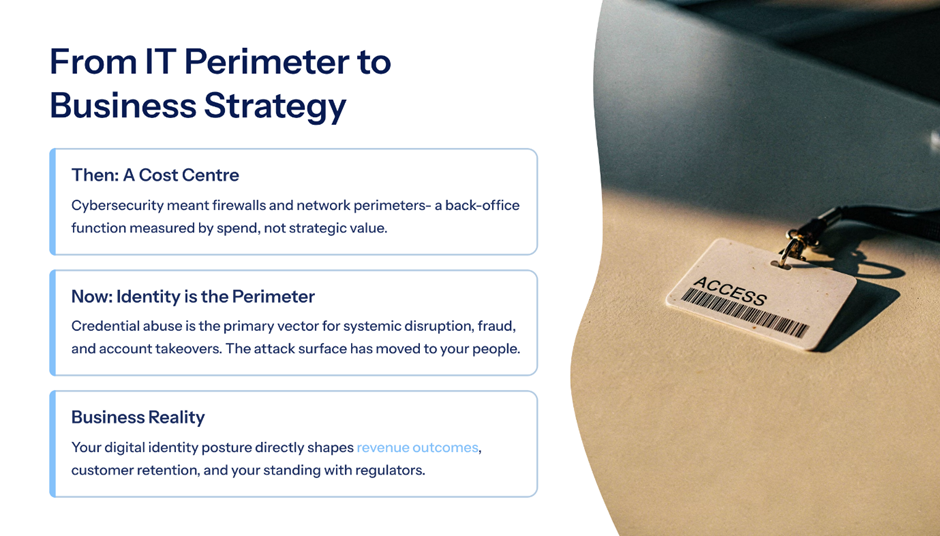
Cybersecurity used to be viewed as an IT responsibility.
Today, it is a business resilience issue.
According to the 2025 Verizon Data Breach Investigations Report, credential abuse and identity-related attacks continue to play a major role in security incidents, while attackers are increasingly leveraging AI to improve phishing and social engineering campaigns.
At the same time, enterprises are rapidly deploying AI assistants, autonomous workflows, and machine identities across their environments.
The challenge isn’t simply managing more identities.
It’s making the right access decisions at business speed.
Every unnecessary permission creates risk.
Every delayed approval impacts productivity.
Every overlooked identity becomes a potential attack path.
Identity has become one of the most valuable assets an organisation manages.
The Problem Most Organisations Don’t See
Many executives believe they have an identity strategy because they invested in Identity and Access Management platforms.
Technology, however, is only one part of the equation.
The bigger challenge is governance.
Ask yourself:
- Who currently has access to your most critical business applications?
- Which permissions are no longer required?
- How many dormant accounts still exist?
- How quickly can your organisation identify excessive privileges?
- Are machine identities receiving the same governance as human identities?
If answering these questions requires multiple teams and several weeks, your identity program is already struggling to keep pace.
This isn’t simply an operational issue.
It is a leadership issue.
What Exactly Are Autonomous Identity Systems?
Think of Autonomous Identity Systems as the evolution of Identity Governance.
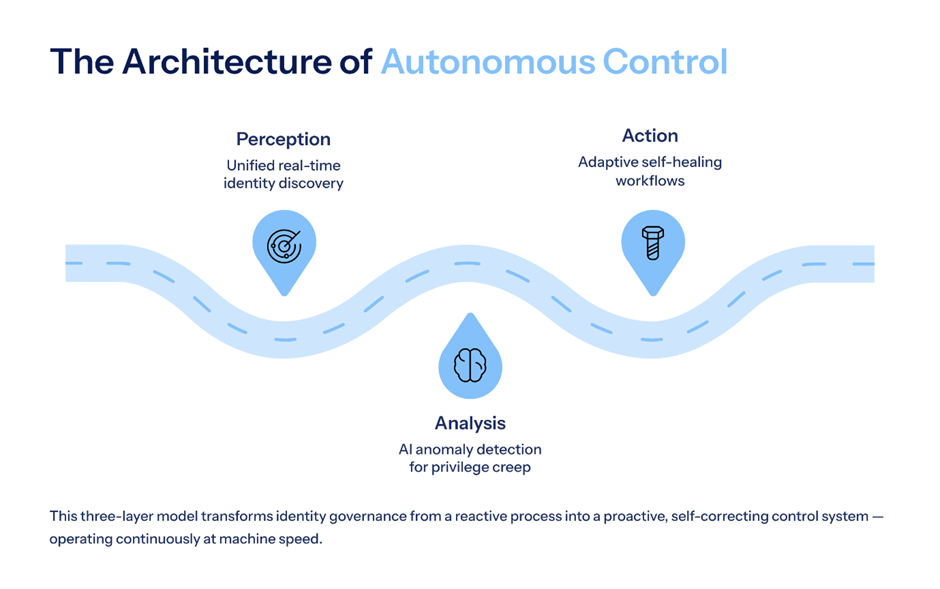
Instead of relying primarily on manual reviews and static rules, these systems continuously evaluate identity risk using AI, behavioural analytics, business context, and predefined governance policies.
They don’t replace leadership.
They improve decision-making.
For example, an autonomous system can:
- Detect unusual access behaviour in real time.
- Recommend removal of unnecessary privileges.
- Identify dormant accounts before they become security risks.
- Trigger automated access reviews.
- Continuously assess identity risk instead of waiting for quarterly audits.
The objective isn’t automation for the sake of efficiency.
The objective is smarter governance.
Why Entrepreneurs Should Care
Many founders assume identity governance becomes important only after their company reaches enterprise scale.
That assumption can become expensive.
Growing businesses often adopt new SaaS platforms, hire distributed teams, onboard contractors, and integrate third-party applications at a rapid pace.
Every new application creates another identity.
Every identity creates another access decision.
Without proper governance, complexity grows faster than revenue.
Eventually, leadership loses visibility into who can access what.
That is when operational inefficiencies become security risks.
Autonomous Identity Systems allow growing organisations to establish governance before complexity becomes unmanageable.
The Rise of Machine Identities
One of the biggest shifts over the next few years won’t involve people.
It will involve machines.
AI agents.
Robotic Process Automation.
Cloud workloads.
Service accounts.
APIs.
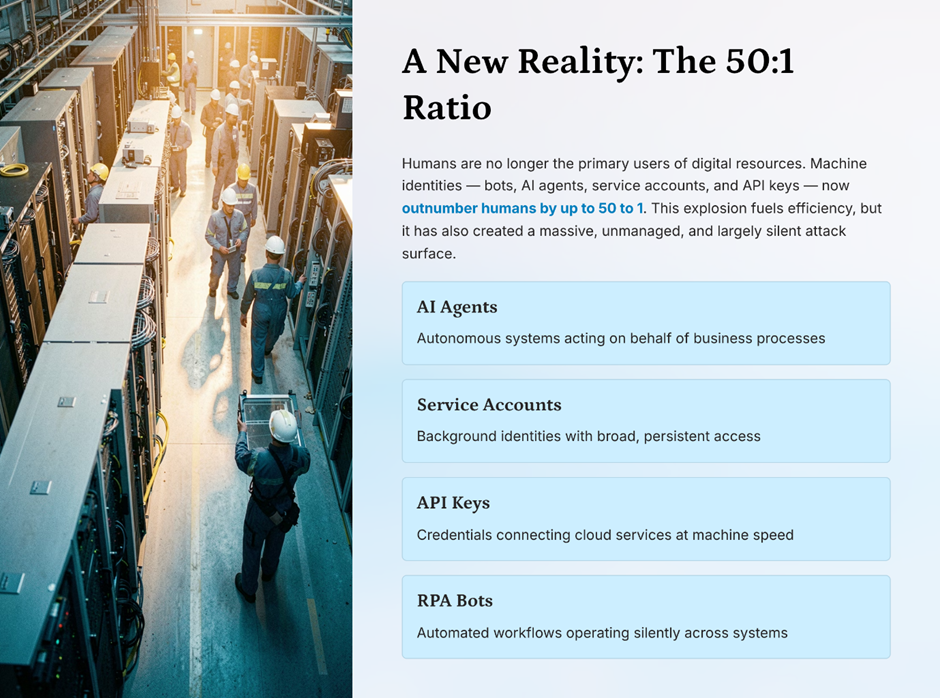
These digital entities increasingly require identities, permissions, and governance.
Industry analysts now estimate that machine identities significantly outnumber human identities in many enterprise environments.
Yet many organisations continue to prioritise governance only for employees.
That gap represents a growing business risk.
The future of identity governance must treat machine identities with the same discipline as human identities.
Why Manual Governance No Longer Scales
Traditional identity reviews depend heavily on periodic audits.
Someone downloads reports.
Managers review access.
Permissions are approved or revoked.
The process works, but only until the scale increases.
Modern organisations simply generate too much identity data.
By the time manual reviews are completed, business conditions have already changed.
Autonomous Identity Systems reduce this delay by continuously evaluating identity decisions instead of waiting for scheduled reviews. That shift transforms governance from reactive to proactive.
The CXO Playbook for Autonomous Identity
Business leaders don’t need another technology initiative.
They need a governance strategy.
Here are five questions every executive team should discuss.
1. Is Identity Treated as a Strategic Business Asset?
Identity should influence cyber resilience, regulatory readiness, operational efficiency, and customer trust, not just IT operations.
2. Are Access Decisions Based on Risk?
Every identity should not receive identical treatment.
High-risk access requires stronger controls.
Low-risk activities should move faster through intelligent automation.
3. Are Machine Identities Governed?
If your organisation is adopting AI, cloud-native services, or automation, governance must extend beyond employees.
4. Can Your Governance Adapt in Real Time?
Quarterly reviews are no longer sufficient for organisations operating continuously.
Modern governance requires continuous visibility.
5. Does AI Support Human Judgment or Replace It?
This is perhaps the most important question.
The objective is not to remove human accountability.
It is to improve human decision-making.
Organisations that strike this balance will build stronger digital trust.
The Leadership Opportunity
Every technology transformation creates winners and followers.
The winners recognise change before it becomes obvious.
Autonomous Identity Systems are not simply another cybersecurity trend.
They represent a fundamental shift in how organisations govern access, reduce risk, and enable digital transformation.
Executives who invest today are not merely improving security.
They are creating a governance model that supports AI, automation, cloud adoption, and future business growth.
Final Thought
The conversation around AI often focuses on productivity.
The conversation around cybersecurity often focuses on threats.
Autonomous Identity Systems bring those two worlds together.
They enable organisations to move faster while maintaining accountability.
They reduce operational friction without compromising governance.
Most importantly, they strengthen the one asset every digital business depends upon: Trust.
The organisations that thrive in the next decade will not simply automate identity.
They will govern it intelligently.