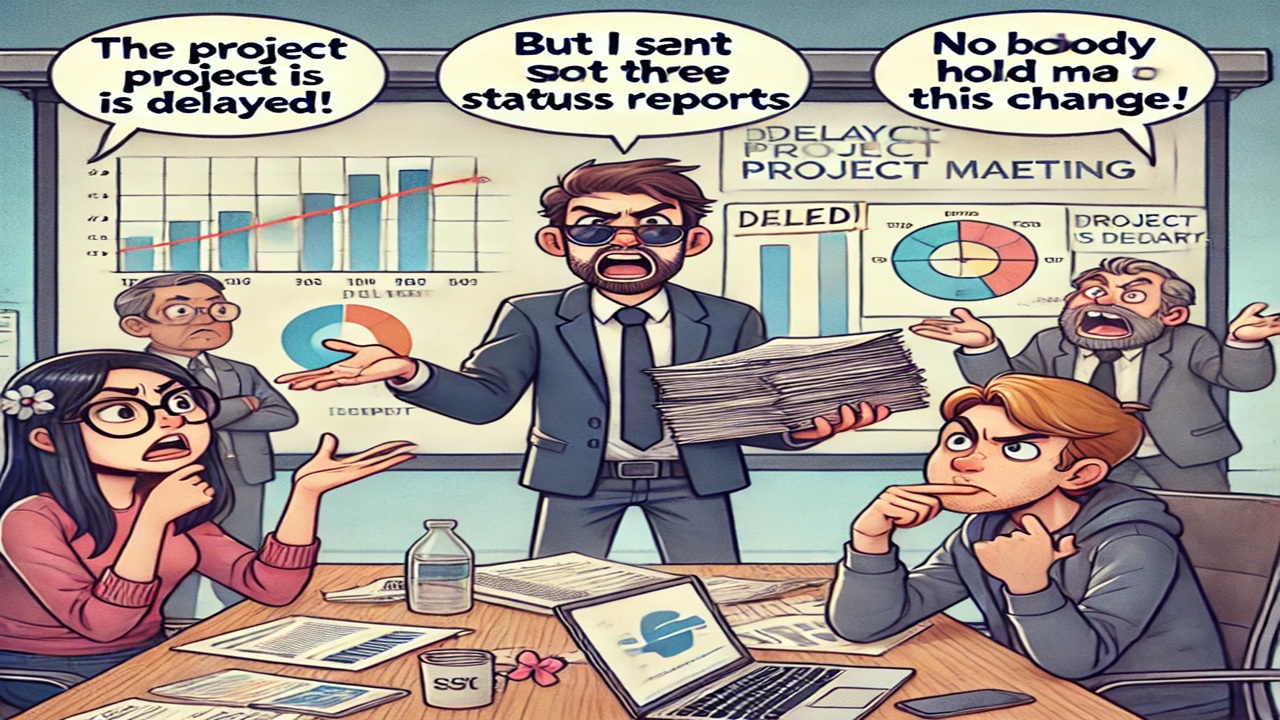
📢 “The project is delayed.”
😠 “But I sent three status reports!”
🤷 “Nobody told me about this change.”
Sound familiar? I once watched a $2M project fail despite 127 status reports and 43 meetings.
The problem wasn’t lack of communication. It was the wrong type of communication.
🎯 Welcome to Part 3/9 of the series: Communication Models in Project Management
Because sending messages isn’t the same as being understood.
💡 Did You Know:
• 56% of project budget risk comes from ineffective communication
• Only 7% of project meaning comes from words alone
📊 Three Game-Changing Communication Models:
1. 🌐 Channel Selection Model
• Co-located: Face-to-face, visual boards, desk drive-bys
• Distributed: Video calls, chat platforms, virtual boards
• Persistent: Knowledge bases, project portals, decision logs
2. ⚡️ The 5C’s Model
• Clear: Unambiguous message
• Concise: No fluff
• Concrete: Specific facts
• Correct: Accurate info
• Complete: Full context
3. 🎯 Communication Impact Model
• Informative: Share status
• Persuasive: Drive decisions
• Consultative: Gather input
• Directive: Guide actions
💪 What’s In It For You:
• Reduce misunderstandings by 60%
• Save 2 hours/day on rework
• Improve stakeholder satisfaction
⚡️ Success Story:
A global project transformed from chaos to clarity by matching communication channels to stakeholder contexts. Result? 70% fewer meetings, 85% better decision tracking, and stakeholder satisfaction jumped from 43% to 91%.
🎯 Quick Wins for Tomorrow:
1. Map stakeholders to optimal channels
2. Apply 5C’s to your next message
3. Match impact type to message purpose
👉 Coming Next: Change Management Model – because resistance isn’t your enemy, it’s your roadmap.
💭 Question: What’s your biggest communication challenge? Share below!