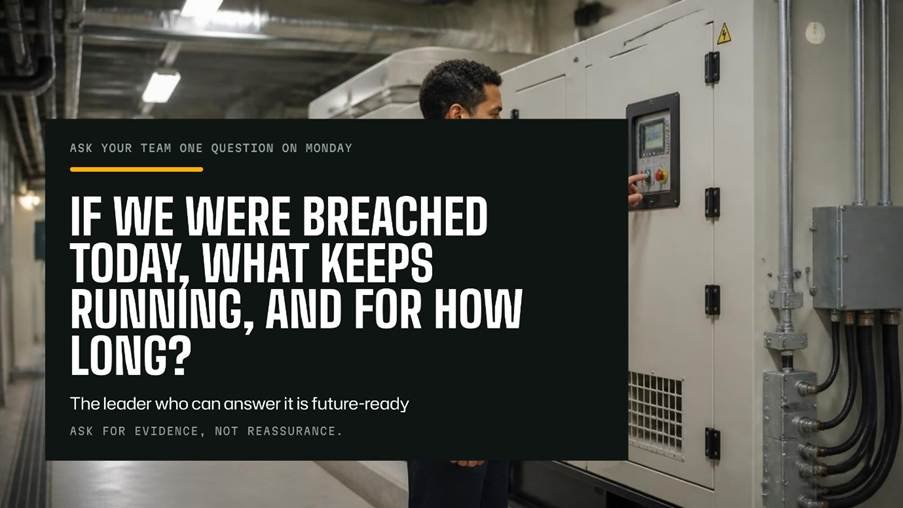
A business does not become resilient simply because it has invested in cybersecurity. It becomes resilient when it knows how to respond, recover and continue operating under pressure.
For years, organisations have measured cybersecurity through the strength of their defences, the sophistication of their security tools and their ability to prevent unauthorised access. These remain essential, but the business environment has changed. AI is accelerating technological adoption, digital dependencies are expanding, and cyber incidents can disrupt operations far beyond the IT department.
As a technology transformation and cybersecurity leader, I believe the next stage of executive leadership requires a different perspective. We must move from asking how effectively we can prevent an attack to understanding how well the organisation can withstand its consequences.
The World Economic Forum’s Global Cybersecurity Outlook 2026 identifies AI-driven threats, geopolitical volatility and widening capability gaps as major forces reshaping cybersecurity. Its findings reinforce a critical message: cyber resilience is becoming an economic and business priority, not merely a technical objective.
Why Traditional Cyber Defence Is No Longer Enough
Traditional cyber defence focuses on reducing the likelihood of an incident through firewalls, endpoint protection, identity controls, vulnerability management and threat detection. A strong defence reduces exposure, but no control can guarantee it will prevent every attack.
The business impact begins when an incident affects revenue, customer services, critical operations or organisational trust. At that point, response quality matters as much as preventive controls.
The executive challenge is to connect cybersecurity with business continuity, operational resilience and enterprise risk management.
What leaders must evaluate
- Operational continuity: Can critical business services continue during a cyber incident?
- Response capability: Can the organisation identify, contain and escalate an incident quickly?
- Recovery readiness: Can affected systems and data be restored to a trusted state?
- Executive accountability: Are decision-making authority and crisis responsibilities clearly defined?
- Business impact: Does leadership understand the financial and operational consequences of prolonged disruption?
The objective is not to replace prevention with recovery. It is to build an integrated model in which prevention, detection, response and recovery work together.
AI Is Changing the Cyber Risk Equation
AI is creating opportunities to improve threat detection and automate security operations, but it is also introducing new vulnerabilities and expanding the potential attack surface.
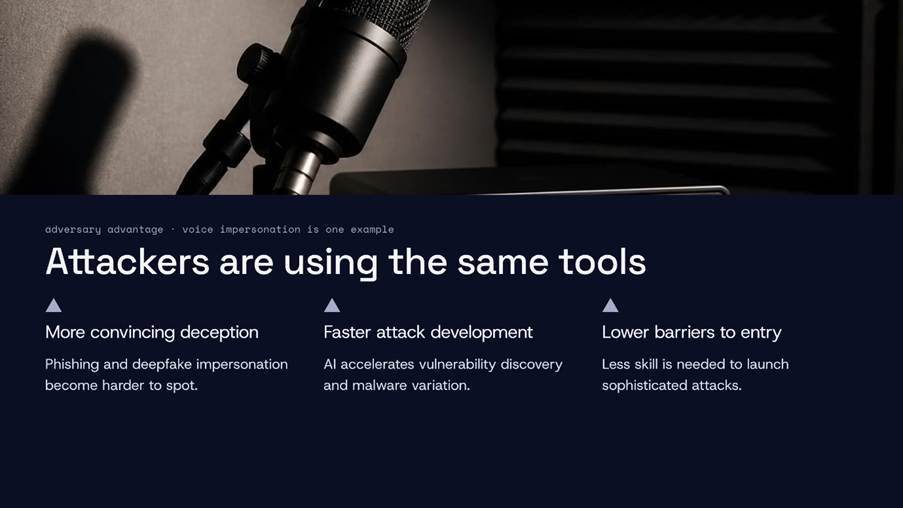
According to the World Economic Forum’s 2026 report, 94% of surveyed respondents expect AI to be the most significant driver of change in cybersecurity during 2026, while 87% identified AI-related vulnerabilities as the fastest-growing cyber risk during 2025.
These findings matter because AI adoption is no longer isolated from enterprise risk. Organisations must consider the security of AI systems, the information they access, the permissions they receive and the decisions they influence.
As an executive, I would examine three areas before scaling AI across critical business operations:
- AI governance: Are ownership, acceptable use and human oversight clearly defined?
- Identity and access management: Can every user, service account and AI agent access only the resources necessary for its role?
- Operational resilience: Can the organisation contain an AI-related security incident without losing control of critical business processes?
AI should strengthen enterprise capability without creating unmanaged dependencies.
Identity Governance Is Central to Business Resilience
Modern enterprises depend on employees, contractors, suppliers, cloud applications, service accounts and increasingly autonomous AI agents. Each identity can provide a legitimate route into business systems, which makes access governance an essential component of cyber risk management.
The challenge is not simply to authenticate users. It is to establish what each identity is permitted to do, monitor how access is used and withdraw privileges when circumstances change.
A resilient identity governance model should include:
- Least-privilege access: Grant only the permissions required for a defined responsibility.
- Privileged access management: Apply stronger controls to identities capable of affecting critical systems.
- Continuous monitoring: Investigate unusual access patterns and potentially compromised credentials.
- Third-party access controls: Review supplier permissions and remove unnecessary access promptly.
- AI identity governance: Assign ownership, permissions and monitoring to autonomous agents that interact with enterprise resources.
Identity governance connects cybersecurity with business resilience because it limits the potential impact of compromised credentials and helps organisations contain incidents before they spread.
Measure Recovery, Not Just Prevention
One of the most important changes in executive cybersecurity is the need to measure how quickly the business can recover from disruption.
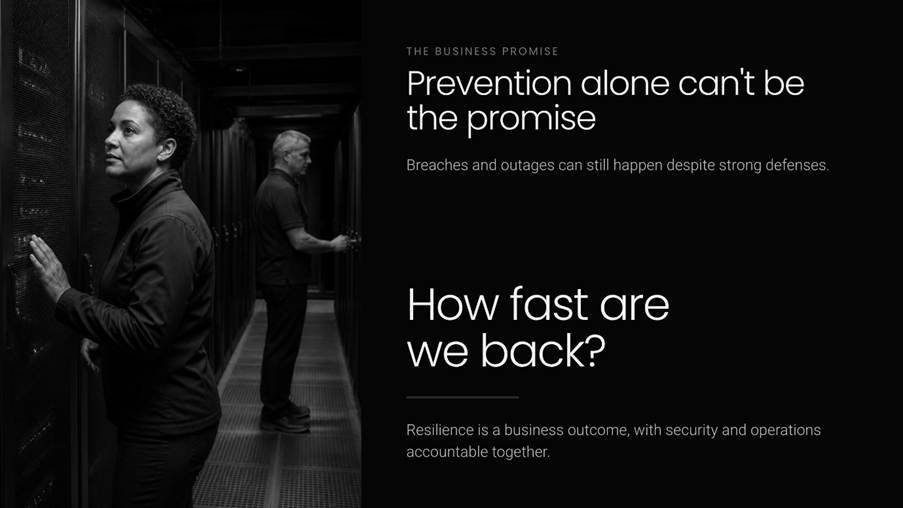
The NIST Cybersecurity Framework 2.0 provides a useful foundation through six functions: Govern, Identify, Protect, Detect, Respond and Recover. The framework connects cybersecurity governance with the full incident lifecycle rather than treating protection as the sole objective.
For CXOs, these functions should translate into measurable business outcomes.
| Executive metric | What it tells leadership |
| Mean time to detect | How quickly a potential incident is identified |
| Mean time to contain | How quickly the threat is restricted |
| Recovery time objective (RTO) | How quickly a critical service must be restored |
| Recovery point objective (RPO) | How much data loss the business can tolerate, measured in time |
| Critical-service availability | Whether essential business operations remain accessible |
| Incident decision time | How quickly accountable leaders can make critical decisions |
These measures should be connected to realistic scenarios, tested recovery procedures, and clearly assigned ownership.
A backup is valuable only if it can be restored successfully. An incident response plan is valuable only if teams can execute it under pressure.Resilience must be demonstrated through testing, not assumed from documentation.
The Executive Shift: From Security Spending to Business Outcomes
Cybersecurity investments often compete with other strategic priorities for capital, management attention and operational resources. The executive responsibility is to explain how these investments protect business value.
That requires moving beyond the number of tools deployed or alerts investigated.
A board-level cybersecurity discussion should establish:
- Which business processes are most critical?
- What would disruption cost in revenue, productivity and customer confidence?
- Which technology and supplier dependencies could interrupt those processes?
- How quickly could the organisation restore essential services?
- Who has authority to make decisions during a major incident?
- What evidence demonstrates that recovery plans work?
These questions help connect cybersecurity strategy with financial exposure, operational continuity and enterprise risk appetite. The objective is to make cybersecurity investment decisions based on the consequences the organisation must be prepared to manage.
How Future Leaders Should Build a Resilience-First Organisation
The next generation of technology leaders must combine technical understanding with business judgement. Their responsibilities will increasingly span cybersecurity, AI governance, identity management, crisis leadership and operational resilience.
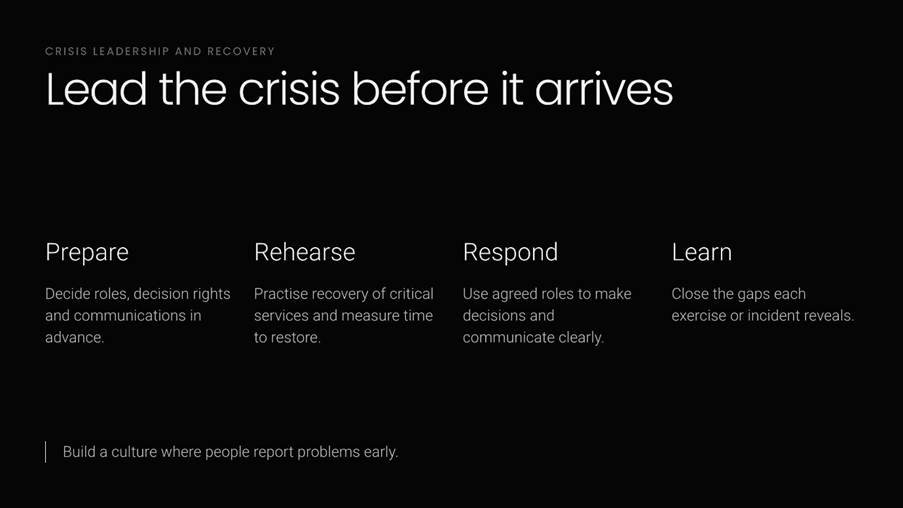
I would prioritise five executive actions.
First, identify critical business services. Map the people, applications, data, suppliers and infrastructure required to keep them operating.
Second, establish clear risk ownership. Define who accepts risk, approves exceptions, leads incident response and authorises recovery decisions.
Third, test realistic disruption scenarios. Exercise ransomware, compromised privileged accounts, cloud outages, supplier incidents and AI-related failures.
Fourth, integrate security and continuity planning. Ensure cybersecurity teams, business leaders, legal functions, communications teams and technology operations can coordinate during a crisis.
Fifth, review resilience continuously. Changes in AI adoption, business processes, suppliers and threat conditions should trigger appropriate reassessment.
These actions transform resilience from an emergency response capability into an ongoing management discipline.
The Future Belongs to Resilient Enterprises
Cybersecurity leadership is entering a different phase. Preventive controls remain indispensable, but organisations must also demonstrate that they can manage disruption, make decisions under pressure and restore critical services with confidence.
The executive challenge is to connect security investment with business continuity, measurable recovery objectives and clear accountability.
AI will continue to reshape the risk landscape, but technology alone will not determine which organisations navigate that change successfully. Leadership will matter just as much.
Cybersecurity should not be measured only by what an organisation prevents, but also by how effectively it protects business operations when prevention fails.
That is the shift from cyber defence to business resilience.
And it is a shift every future-ready executive should be prepared to lead.