
The Future of Ethical, Sustainable Security
For much of the last decade, cybersecurity has been measured by strength: stronger controls, tighter restrictions, faster detection. Success was defined by how well organisations could stop threats, lock systems, and enforce compliance.
That definition is starting to feel incomplete.
Today, security decisions affect far more than risk posture. They shape employee experience, customer trust, cloud consumption, regulatory confidence, and even environmental impact. Security has moved from being a technical safeguard to a social, economic, and ethical responsibility.
The future of security will not be judged only by what it prevents, but by how responsibly it operates.
Ethical, sustainable security is not about doing less, it is about doing security with intent, proportionality, and respect.
Why Ethical and Sustainable Security Is No Longer Optional
Across industries, leaders are facing a quiet but growing tension:
- Security controls are expanding, but trust is not
- Cloud costs are rising, but efficiency is not
- Compliance is increasing, but clarity is not
- Employees feel monitored, but not protected
- Customers feel secure, but also constrained
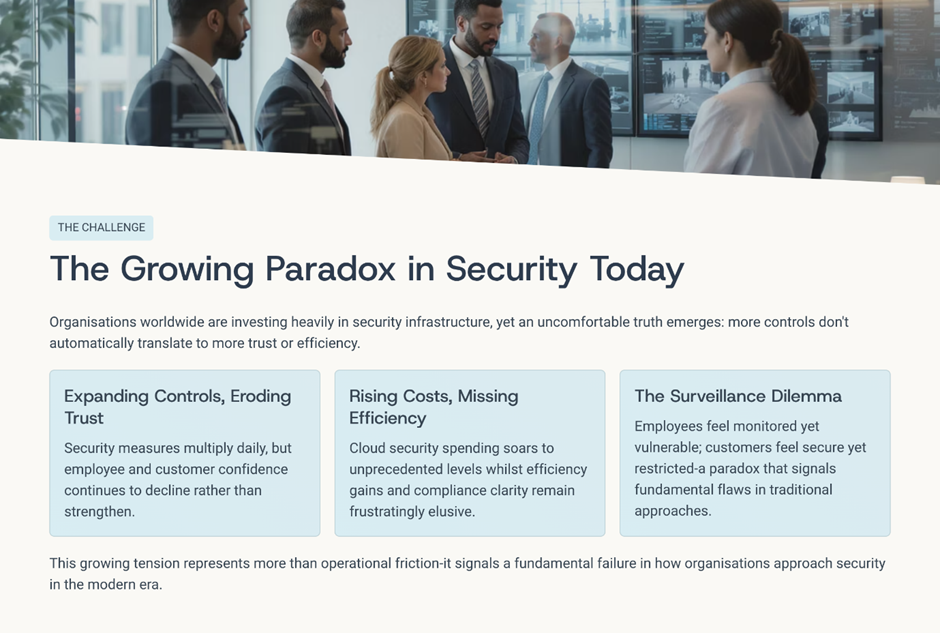
These signals indicate a more profound issue.
Security has become powerful, but not always considerate.
Ethical, sustainable security is not a philosophical idea. It is a response to the real-world consequences of security systems that scale faster than the thinking behind them.
The Surprising Pain Point Leaders Rarely Say Out Loud
Here is an uncomfortable truth many CXOs recognise privately:
Most security programs today are technically sound but operationally exhausting.
Security teams are stretched.
Business users feel friction.
Cloud bills keep growing.
Yet incidents still happen.
The problem is not effort.
It is design.
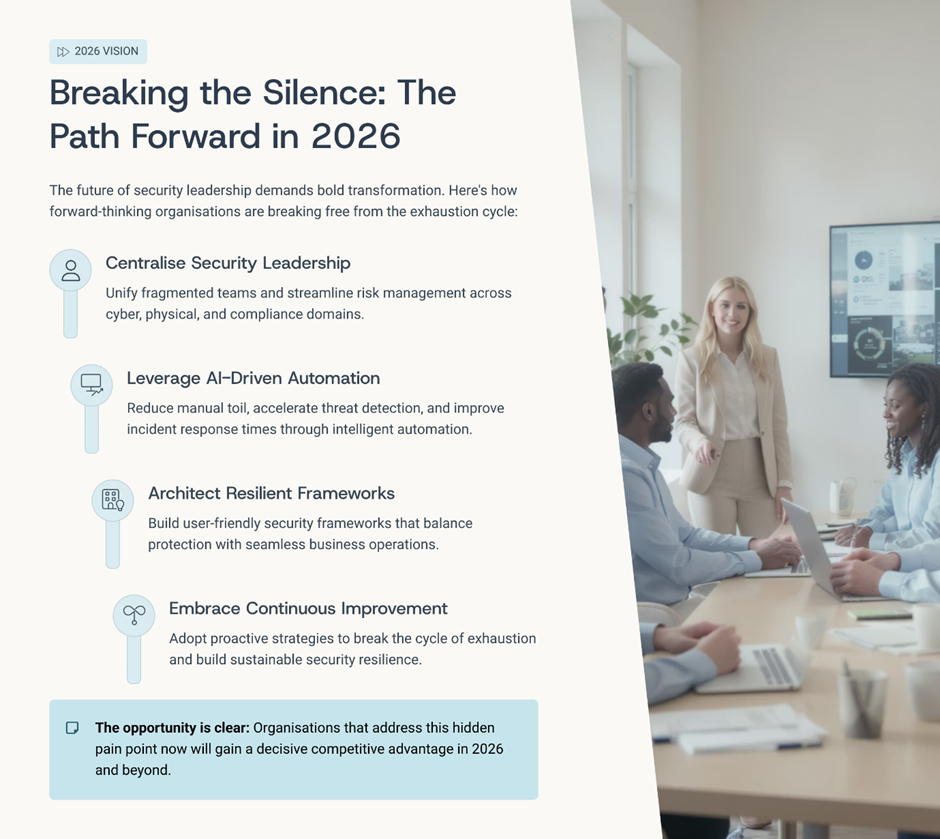
Security systems were built to stop attackers.
They were not always built to respect people, resources, or long-term impact.
What Ethical Security Really Means in Practice
Ethical security is often misunderstood as being “softer” on controls. It is not.
Ethical security means:
- protecting people without treating them as threats
- collecting only what is necessary
- enforcing access with clarity, not confusion
- designing controls that people can understand and trust
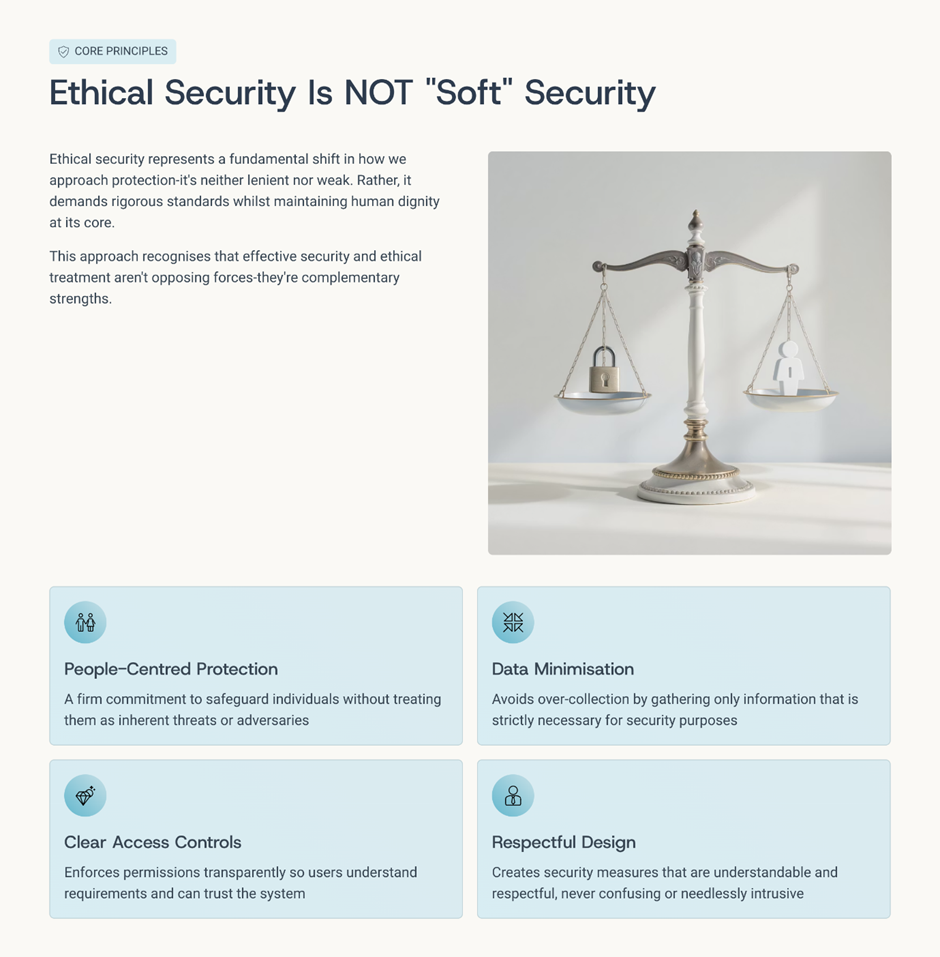
At its core, ethical security respects human context.
When security decisions lack transparency or proportionality, they erode trust; even if they are technically correct.
Why Sustainability Now Applies to Security
Sustainability discussions traditionally focused on energy, infrastructure, and supply chains. Security was rarely part of that conversation.
That has changed.
Modern security systems:
- run continuously in the cloud
- process massive volumes of data
- trigger frequent checks and reviews
- rely on constant monitoring
Every decision carries:
- compute cost
- operational cost
- human cost
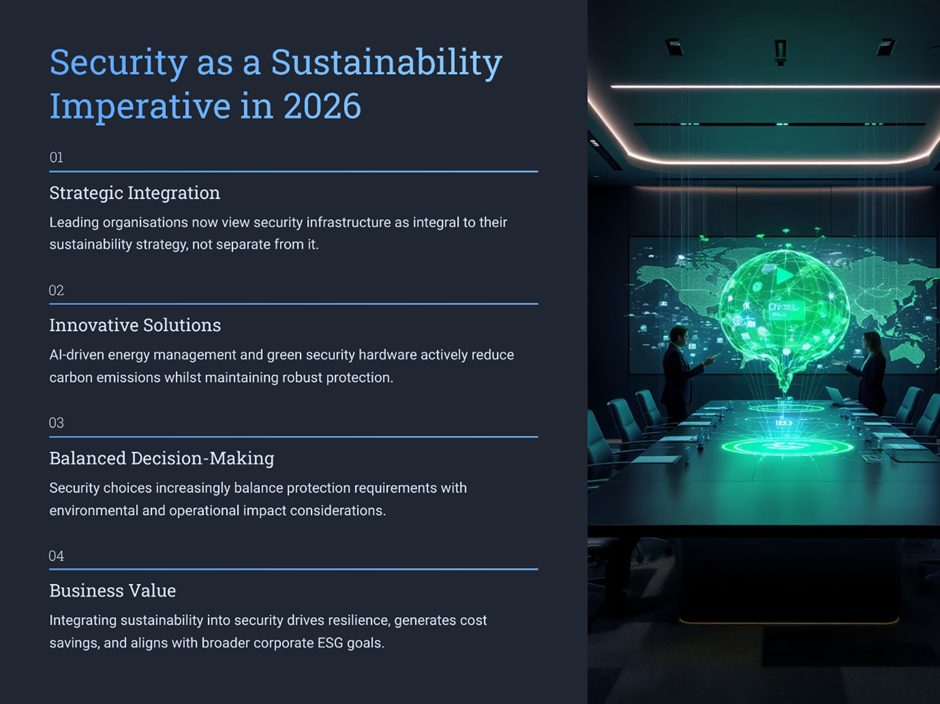
Sustainable security asks a simple but powerful question:
Are we securing what matters, or just running security because we always have?
Real-World Patterns Showing the Shift
Across organisations rethinking security, a few patterns stand out:
- Identity-based incidents now outnumber infrastructure breaches
- Excessive access creates more risk than missing controls
- Blanket security policies generate fatigue and workarounds
- Continuous scans increase cost without reducing exposure
- Teams spend more time maintaining security than improving it
These are not failures of technology.
They are signals that security has outgrown its original design assumptions.
The Role of Identity in Ethical, Sustainable Security
Identity is no longer just a technical control that sits at the start of a login process. It has become the decision-making core of modern security. Every access decision made today carries ethical weight, operational impact, and long-term consequences.
At its heart, identity answers some of the most fundamental questions leaders must confront:
Who Should Be Trusted
Trust is no longer binary. Ethical security recognises that trust must be earned, contextual, and revisited over time. Granting access simply because someone belongs to an organisation or role ignores how fluid risk has become. Sustainable identity systems evaluate trust based on relevance, responsibility, and context, not assumptions.
When trust is granted thoughtfully:
- exposure is reduced,
- accountability is clearer,
- and security feels intentional rather than arbitrary.
For How Long Trust Should Exist
One of the biggest contributors to identity risk is permanent access for temporary needs. Ethical identity management treats access as a time-bound privilege, not a lifetime entitlement. Sustainable systems are designed to remove access naturally when its purpose ends, without relying on manual intervention or memory.
This approach:
- reduces unused access,
- lowers operational load,
- and limits the window of misuse.
Under What Conditions Is Appropriate
Context matters. Ethical identity systems do not judge users solely on who they are, but also on how, when, and why access is requested. A login during business hours from a familiar location carries a different level of risk than one at an unusual time or context.
By incorporating conditions:
- security becomes proportional,
- unnecessary friction is avoided,
- and legitimate work continues uninterrupted.
With What Level of Visibility and Transparency
Ethical security avoids hidden decisions. When access is denied or challenged, users should understand why. Transparency builds trust and reduces frustration. Sustainable identity operations communicate clearly, ensuring people feel protected rather than policed.
Visibility also helps leaders:
- explain security decisions confidently,
- demonstrate fairness,
- and reinforce a culture of responsibility.
Why Identity Is Central to Sustainability
Identity systems run continuously. Every unnecessary identity, entitlement, or check consumes resources. By designing identity operations that are clean, adaptive, and purposeful, organisations reduce waste, both digital and human.
Ethical identity management is not just about protection.
It is about respecting people, resources, and the future.
That is why identity sits at the centre of ethical, sustainable security, and why leadership attention here has never mattered more.
What Ethical, Sustainable Security Looks Like
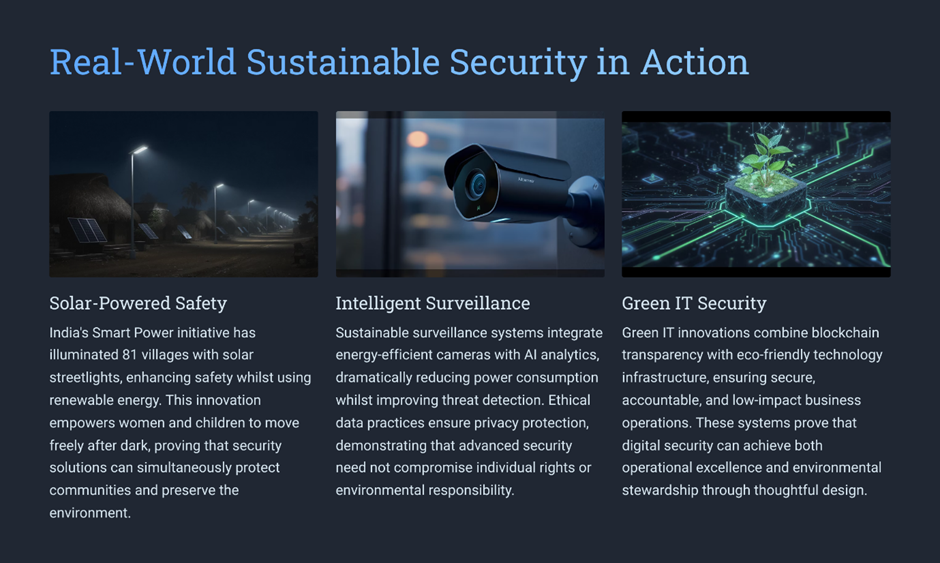
Ethical, sustainable security is not defined by how restrictive systems are. It is defined by how intentionally they are designed. From a leadership standpoint, it is about building security that protects without exhausting, governs without alienating, and scales without waste.
Security That Scales with Risk
Not all risks are equal, and ethical security recognises that treating them as such creates unnecessary friction. Sustainable security aligns the strength of controls with the impact of potential harm. High-risk access, sensitive data, and critical systems deserve deeper scrutiny. Low-risk activities do not.
When security scales with risk:
- critical assets receive focused protection,
- routine work remains uninterrupted,
- teams spend time where it actually reduces exposure.
This approach improves outcomes because attention is finite. Ethical security respects that reality.
Security That Respects People
Security exists to protect people, yet poorly designed controls often make them feel distrusted or monitored. Ethical security is transparent. It explains why controls exist and how decisions are made.
When people understand security:
- compliance becomes cooperation,
- workarounds decrease,
- resistance turns into shared accountability.
Respecting people does not weaken security; it strengthens it by keeping humans engaged rather than fatigued.
Security That Respects Resources
Every security process consumes resources: compute, time, attention, and energy. Sustainable security questions whether that consumption is justified. Continuous scans, repeated reviews, and always-on monitoring may feel thorough, but often deliver diminishing returns.
Resource-conscious security focuses on:
- removing unused access,
- automating repeatable tasks,
- eliminating checks that add little value.
Efficiency here is not cost-cutting; it is responsible stewardship.
Security That Builds Trust
Ultimately, ethical security earns trust through consistency and predictability. When controls are applied unevenly or without explanation, trust erodes. When security decisions are clear, proportionate, and repeatable, trust compounds.
Trust is not a soft outcome. It directly affects:
- incident response speed,
- audit confidence,
- employee behaviour,
- customer perception.
Sustainable security understands that trust is not separate from protection; it is one of its strongest enablers.
Why This Is a CXO Responsibility
Ethical and sustainable security cannot be delegated entirely to tools or teams.
It sits at the intersection of:
- risk
- culture
- trust
- cost
- reputation
When leaders ask only:
“Are we secure?”
They miss the more important questions:
- Are we secure responsibly?
- Are we secure efficiently?
- Are we secure without harming trust?
The organisations that ask these questions early are already pulling ahead.
An Optimistic Way Forward
The encouraging reality is this:
Ethical, sustainable security does not require a complete reset.
It starts with:
- questioning legacy practices
- measuring impact, not activity
- aligning security with human behaviour
- designing for longevity, not urgency
Small changes; applied consistently; deliver:
- lower cost
- stronger trust
- better security outcomes
- healthier teams
The Future Will Favour Thoughtful Security
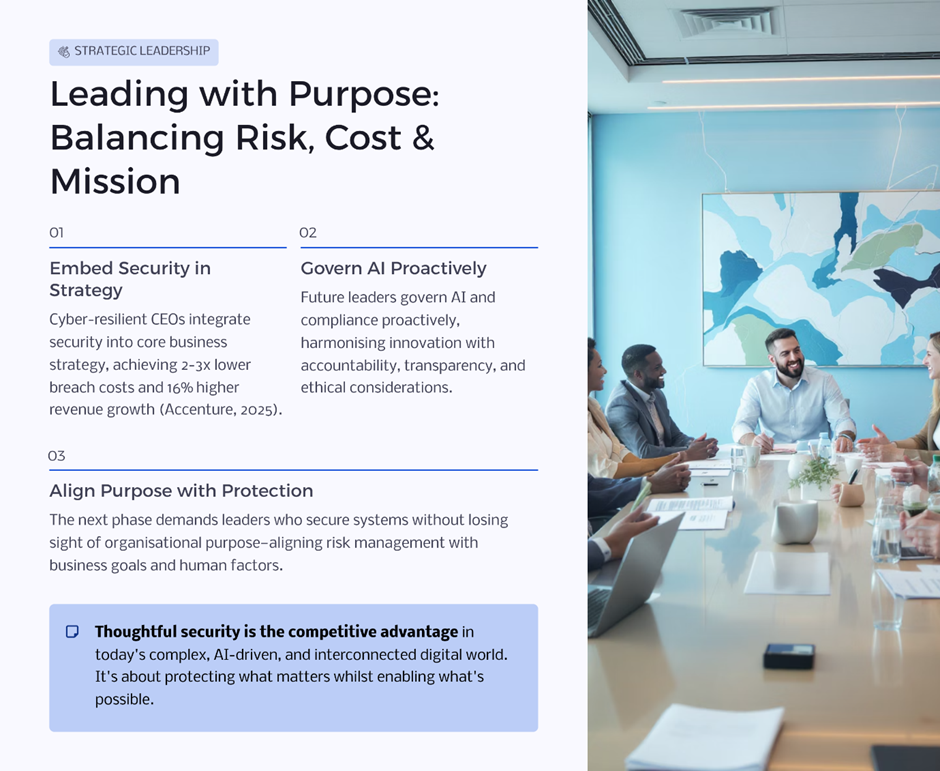
The next phase of cybersecurity leadership will not be defined by who deploys the most tools or enforces the strictest rules.
It will be defined by who can:
- protect trust without exhausting people
- reduce risk without inflating cost
- secure systems without losing sight of purpose
Ethical, sustainable security is not a compromise.
It is a maturity milestone.
Closing Reflection
Security exists to protect what matters.
When it forgets that purpose, when it becomes excessive, opaque, or wasteful, it quietly undermines the very trust it is meant to defend.
The future belongs to organisations that secure with intent, with restraint, and with responsibility.
That is not softer security.
That is better security.
If you are rethinking how identity, access, and security operate across your organisation, this is the right moment to step back and redesign, not just reinforce.