

In the early stages of building a product, most founders focus on speed.
Speed to launch.
Speed to acquire users.
Speed to raise funding.
Speed to scale infrastructure.
But in today’s digital economy, one overlooked question is quietly becoming the defining factor between sustainable growth and operational vulnerability:
A. Who has access to what inside your product ecosystem?
This is where Identity and Access Management (IAM) stops being a backend IT function and starts becoming the foundation of modern product architecture.
For years, many startups and growing businesses treated identity security as something to “fix later.” But the landscape has changed dramatically. The rise of distributed teams, AI-driven cyberattacks, geopolitical cyber tensions, SaaS dependency, and cloud-native ecosystems has pushed identity to the centre of enterprise resilience.
Today, identity is no longer just a security layer.
It is a business layer.
B. The Shift from Infrastructure-Centric Security to Identity-Centric Security
Traditionally, organisations invested heavily in perimeter-based security models. Firewalls, endpoint protection, VPNs, and network monitoring were seen as the primary defence systems.
But modern businesses no longer operate inside fixed perimeters.
Employees work remotely.
Third-party vendors access internal systems.
Applications communicate through APIs.
Customers expect seamless digital experiences across devices and geographies.
As a result, attackers no longer target networks first.
They target identities.
According to multiple industry cybersecurity reports over recent years, compromised credentials and identity misuse continue to remain among the leading causes of enterprise breaches globally.
This shift has fundamentally changed how modern product architecture must be designed.
Founders building SaaS products, fintech platforms, healthcare systems, AI tools, or enterprise applications can no longer afford to treat IAM as an optional enhancement.
Identity must become the first layer of architecture itself.
C. Why Founders Often Ignore Identity Early
Some of the fastest-growing companies in the world don’t collapse because of weak products or poor innovation.
They collapse because growth quietly outpaces control.
In the early stages of building a company, founders are naturally focused on survival and momentum. Every decision revolves around speed: launching faster, acquiring users, securing funding, expanding teams, and staying ahead of competitors. In that intense growth environment, Identity and Access Management (IAM) often feels like something that can be handled later, once the company becomes “big enough” to worry about security governance.
The reason is understandable.
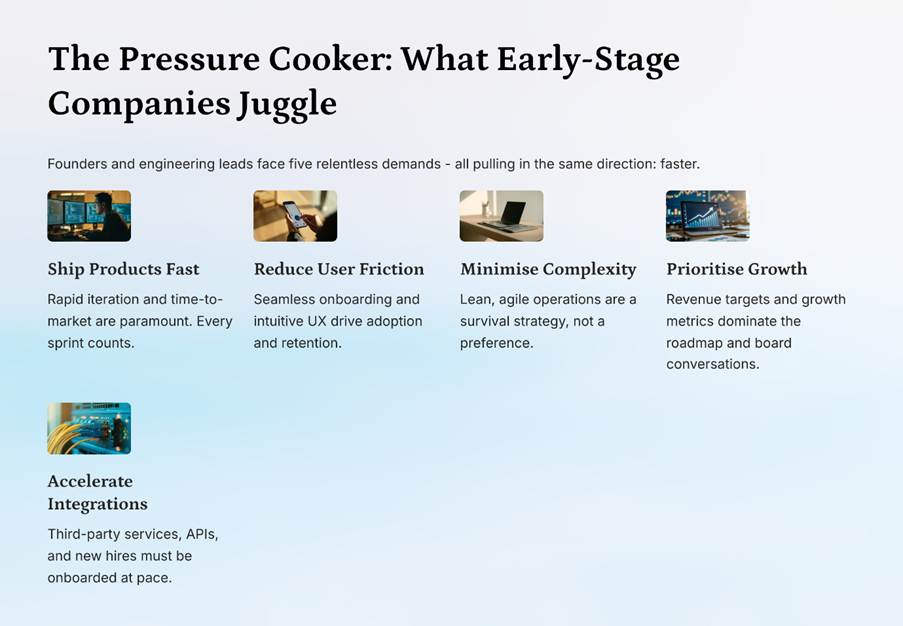
Early-stage companies operate under constant pressure:
- Ship products quickly
- Reduce friction in user experience
- Minimise operational complexity
- Prioritise revenue and growth metrics
- Accelerate hiring and third-party integrations
In this phase, IAM is frequently viewed as:
- an enterprise-level problem,
- a compliance requirement,
- or a technical layer that slows agility.
But this mindset creates one of the most dangerous forms of operational debt: unmanaged identity complexity.
As organisations grow, so does the number of employees, vendors, APIs, integrations, cloud services, customer accounts, and privileged access points. Without a structured identity framework, businesses gradually lose visibility over who has access to what, why access exists, and whether those permissions are still necessary.
The danger is that these gaps rarely create immediate disruption.
Instead, they accumulate silently in the background until a security incident, insider threat, compliance audit, or operational failure exposes them all at once.
By then, fixing identity architecture is no longer a small technical adjustment. It becomes an expensive organisational challenge affecting productivity, customer trust, investor confidence, and long-term scalability.
This is one of the most common conversations experienced by cybersecurity and IAM leaders now having with founders.
Not because founders intentionally ignore security, but because modern digital growth often outpaces governance maturity.
D. Real-World Business Impact: Identity Failures Are No Longer Technical Incidents
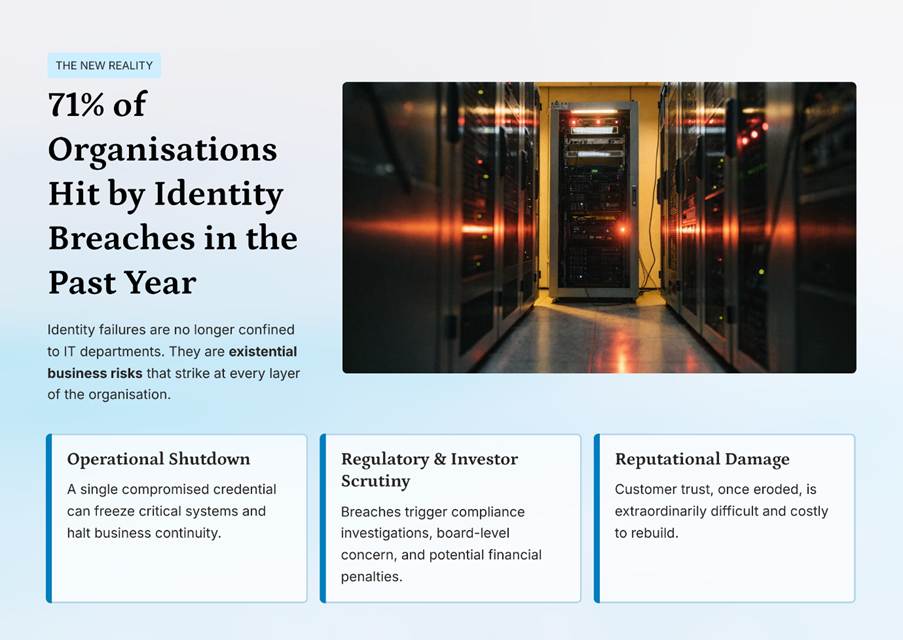
The business consequences of poor identity architecture now extend far beyond IT teams.
A single compromised identity can lead to:
- operational shutdowns,
- customer trust erosion,
- regulatory scrutiny,
- investor concern,
- and reputational damage.
Recent geopolitical tensions and state-sponsored cyber activities across global economies have only intensified this risk environment.
During ongoing global cyber conflicts linked to geopolitical instability, attackers increasingly target:
- supply chains,
- cloud ecosystems,
- SaaS platforms,
- and identity infrastructure.
Why?
Because identities provide scalable access.
Attackers no longer need to “break in” traditionally if legitimate credentials already open the door.
This is precisely why modern enterprises are aggressively adopting:
- Zero Trust Architecture,
- adaptive authentication,
- privileged access management,
- and identity governance frameworks.
The conversation has shifted from:
“How do we secure systems?”
to:
“How do we continuously validate trust?”
The SaaS Economy Has Changed Identity Security Forever
E. Modern SaaS platforms are deeply interconnected.
A single organisation may rely on:
- cloud infrastructure providers,
- CRM systems,
- payment integrations,
- analytics platforms,
- customer support tools,
- AI integrations,
- and external developer ecosystems.
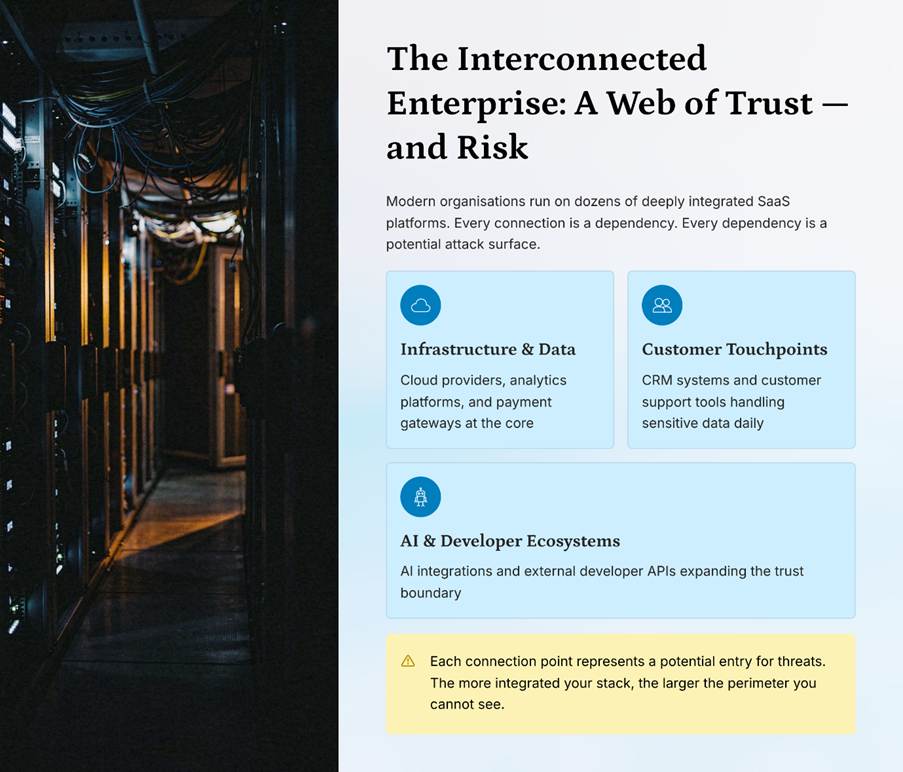
Every integration creates identity relationships.
Every identity relationship creates risk exposure.
Without centralized identity governance, businesses lose visibility over:
- who accessed what,
- when access was granted,
- whether permissions remain necessary,
- and how privileged identities are managed.
For founders scaling quickly, this creates hidden operational fragility.
And in competitive markets, trust is becoming a growth differentiator.
Enterprise buyers increasingly evaluate vendors not only on features, but on:
- security maturity,
- governance readiness,
- and digital trust architecture.
In many industries today, strong identity governance directly influences enterprise sales velocity.
F. Why CXO Leadership Matters in Product Identity Architecture
This is where experienced IAM and cybersecurity leadership becomes critical.
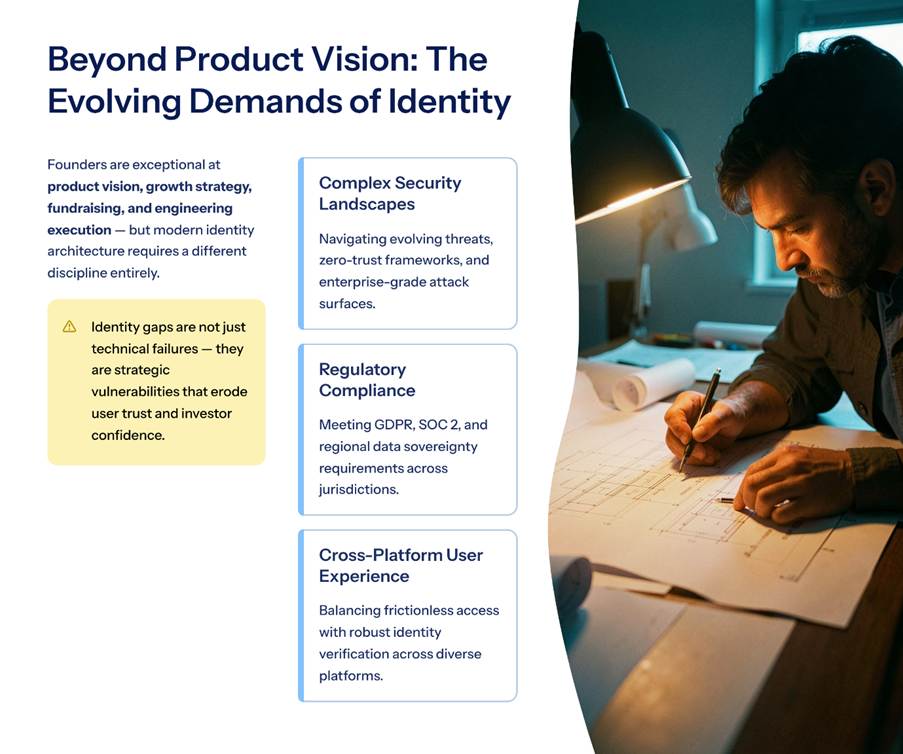
Most founders are experts in product vision, growth strategy, fundraising, or engineering execution.
But modern identity architecture requires cross-functional strategic thinking.
A CXO-level IAM advisor does more than implement controls.
They help organisations align:
- security,
- scalability,
- compliance,
- operational efficiency,
- and customer trust.
Their role often includes:
- designing scalable IAM frameworks,
- reducing identity-related operational risks,
- improving governance maturity,
- preparing organizations for enterprise readiness,
- and helping leadership teams make long-term architecture decisions.
More importantly, experienced cybersecurity leaders understand that identity architecture is not just about restriction.
It is about enabling secure growth without disrupting user experience or business agility.
That balance is difficult to achieve without strategic leadership.
G. Identity as a Competitive Advantage
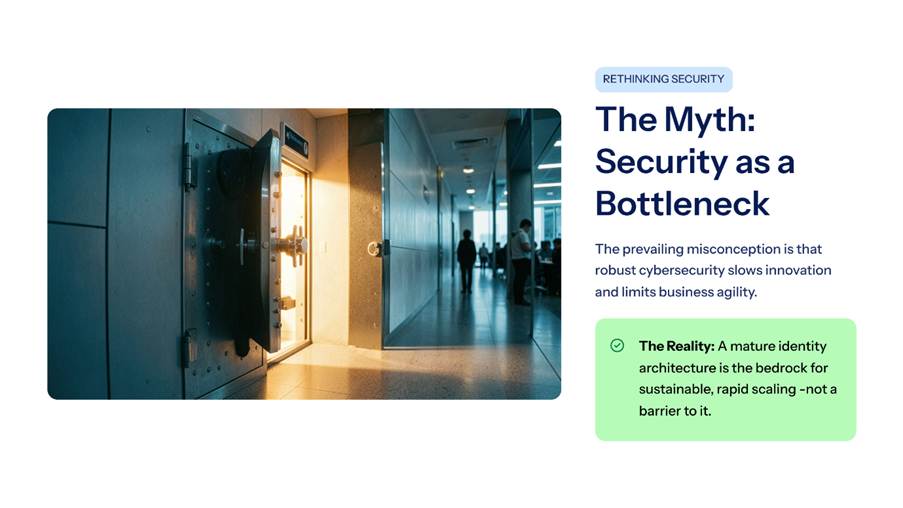
One of the biggest misconceptions in modern business is that cybersecurity slows innovation.
In reality, mature identity architecture accelerates sustainable scaling.
Strong IAM frameworks help businesses:
- onboard users securely,
- scale globally,
- simplify access governance,
- strengthen customer trust,
- reduce insider risk,
- improve audit readiness,
- and build resilience against evolving cyber threats.
For startups preparing for partnerships, enterprise deals, or investor due diligence, identity maturity increasingly becomes a business credibility signal.
This is especially important in industries like:
- fintech,
- healthcare,
- SaaS,
- AI,
- e-commerce,
- and digital infrastructure.
Customers today expect seamless digital experiences.
But they also expect security confidence.
The companies that succeed long-term will be those capable of delivering both simultaneously.
What many founders fail to realise is that modern buyers are becoming far more security-conscious than ever before. Enterprise clients now routinely evaluate vendors based on their identity governance maturity, access management practices, compliance readiness, and ability to protect sensitive user data. In highly competitive markets, even a single security concern can delay partnerships, slow procurement cycles, or weaken customer trust.
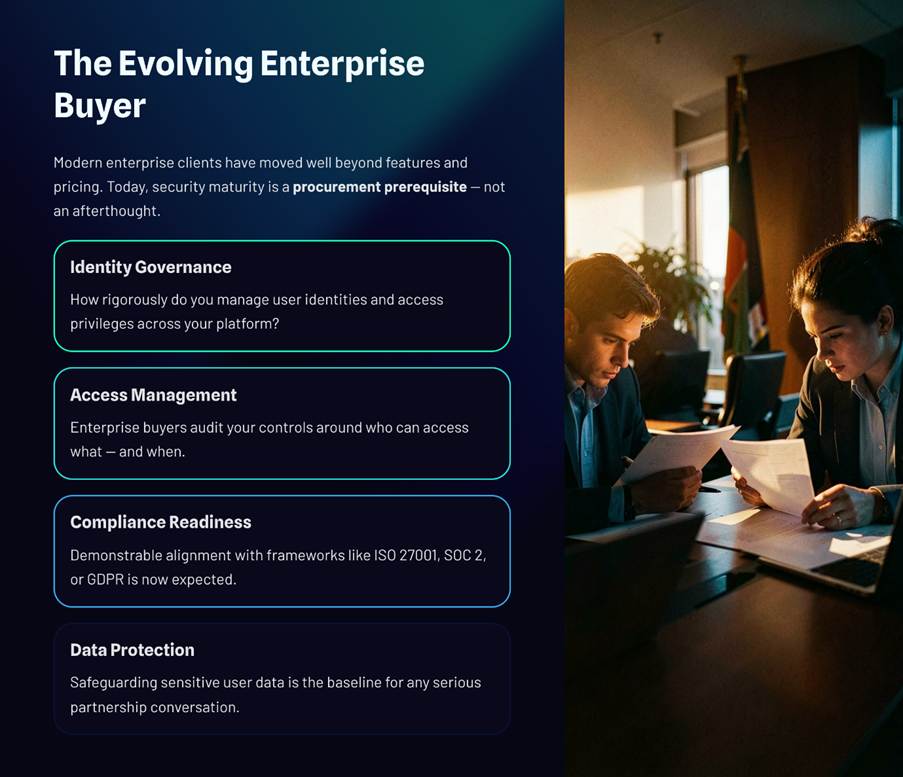
This shift has transformed identity from an internal operational function into a visible business differentiator.
Organisations with strong identity architecture often move faster during enterprise onboarding, adapt more efficiently to regulatory requirements, and respond to security incidents with greater confidence and control. Investors, partners, and customers increasingly associate mature identity governance with long-term operational stability.
In many ways, identity architecture is becoming part of brand reputation itself.
Businesses that proactively invest in secure digital ecosystems are not only reducing risk; they are building trust capital that directly influences growth, retention, and market credibility in an increasingly interconnected digital economy.
H. The Rise of Zero Trust and Identity-First Architecture
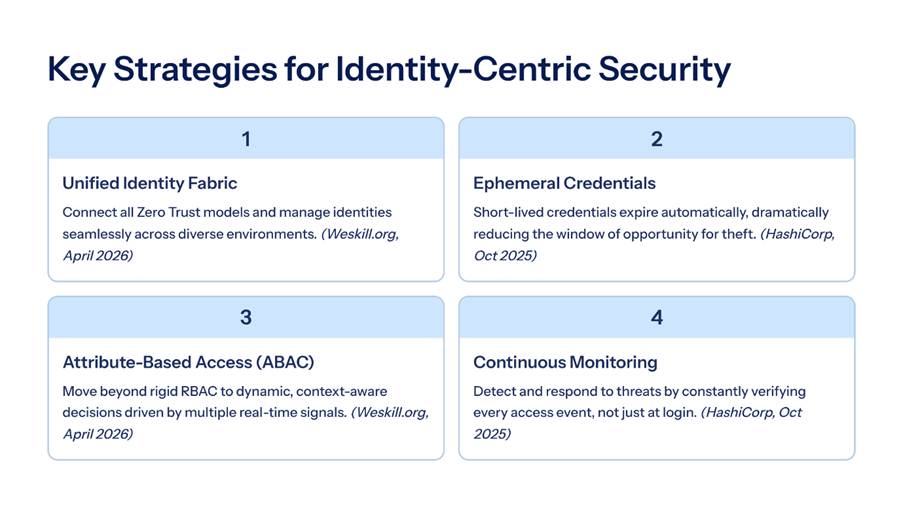
Modern cybersecurity strategies are rapidly moving toward Zero Trust models.
The core principle is simple:
Never trust. Always verify.
In practical terms, this means:
- continuous identity validation,
- least-privilege access,
- contextual authentication,
- and real-time governance visibility.
Identity becomes the central decision-making layer across the entire business ecosystem.
This shift is not temporary.
It represents the future direction of digital infrastructure itself.
As AI adoption accelerates and remote ecosystems continue expanding, identity complexity will only increase further.
Organisations that proactively build identity-first architectures today will operate with significantly stronger resilience tomorrow.
I. What Founders Should Prioritise Right Now
Founders do not necessarily need enterprise-scale IAM complexity on day one.
But they do need strategic foresight.
Some critical early priorities include:
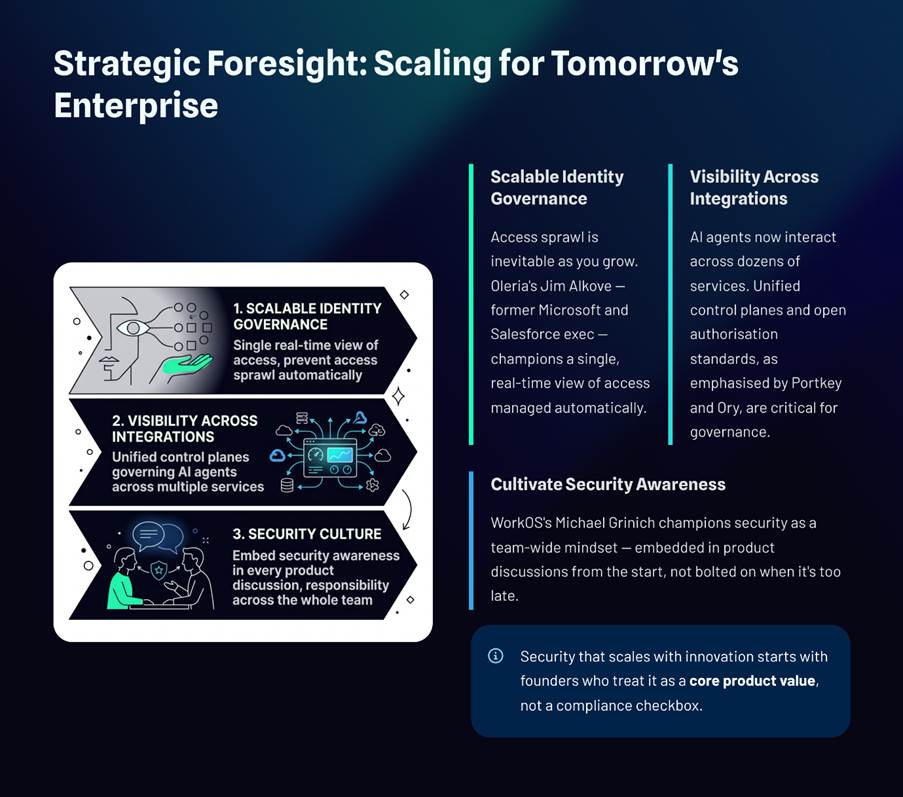
- implementing strong authentication systems,
- limiting unnecessary privileged access,
- adopting scalable identity governance practices,
- maintaining visibility across integrations,
- and building security awareness into product architecture discussions early.
The goal is not perfection.
The goal is preparedness.
Because once a company reaches rapid scale, identity gaps become exponentially harder to control.
Final Thoughts
The future of cybersecurity is increasingly becoming the future of identity.
As businesses continue operating in interconnected digital ecosystems shaped by AI, remote work, geopolitical cyber tensions, and cloud-native growth, identity will define how organisations build trust, resilience, and scalability.
For founders and entrepreneurs, the question is no longer whether identity security matters.
The real question is:
At what stage will your business decide to take it seriously?
The companies that treat identity as a strategic business enabler, not just a technical safeguard, will be better positioned to scale confidently in the years ahead.
And in a world where digital trust increasingly shapes customer decisions, investor confidence, and enterprise resilience, building secure foundations early may ultimately become one of the smartest growth decisions a business can make.